The Hidden Link Between Asthma, Eczema, and Allergies, and Why It Matters for Your Care

If your child had eczema as a baby, developed a food allergy as a toddler, and now reaches for an inhaler during pollen season, you are probably not dealing with three separate strokes of bad luck. You are likely seeing one connected pattern. Specialists call it the atopic march, and understanding it can change how your family approaches care.
This connection shapes how we practice. Our Orlando allergy and asthma specialists and our board-certified dermatologists work side by side, so conditions that travel together can be treated together.
What Is the Atopic March?
The atopic march describes a common progression of allergic conditions that often begins in infancy and continues into childhood or adulthood. It typically unfolds in this order:
- Atopic dermatitis (eczema): Dry, itchy, inflamed skin, often appearing in the first year of life.
- Food allergies: Reactions to foods such as peanuts, eggs, or milk, frequently emerging in the toddler years.
- Allergic rhinitis (hay fever): Sneezing, congestion, and itchy eyes triggered by pollen, dust, or pet dander.
- Asthma: Airway inflammation that causes wheezing, coughing, and shortness of breath.
Not everyone follows every step, and the order can vary. Still, research consistently shows that children with moderate to severe eczema are more likely to develop allergies and asthma later on.
Why These Conditions Are Connected
It Often Starts With the Skin Barrier
Healthy skin works like a brick wall that keeps moisture in and irritants out. In people with eczema, that wall has gaps, sometimes linked to genetic differences in a skin protein called filaggrin. Allergens such as dust mites, pollen, and food proteins can slip through damaged skin and teach the immune system to overreact.
Once the immune system learns to treat these substances as threats, it can respond in the nose, lungs, and gut as well.
The Same Inflammation in Different Places
Eczema, allergies, and allergic asthma share a common type of immune response, often called type 2 inflammation. The skin, airways, and digestive tract are simply different places where the same overactive response shows up. That is why treating one condition in isolation can leave the others unchecked.
Family History Plays a Role
These conditions tend to run in families. When one or both parents have eczema, hay fever, or asthma, their children face a higher risk of developing one or more of them.
Why Central Florida Adds to the Challenge
Living in Orlando means a nearly year-round allergy calendar. Oak and pine pollen peak in late winter and spring, grass pollen dominates the summer, and ragweed arrives in the fall. High humidity also encourages mold growth and thriving dust mite populations indoors.
Heat and sweat can aggravate eczema, while sudden weather shifts and afternoon storms can trigger asthma flares. For families managing several atopic conditions, there is rarely a true off-season.
How Eczema Looks Across Different Skin Tones
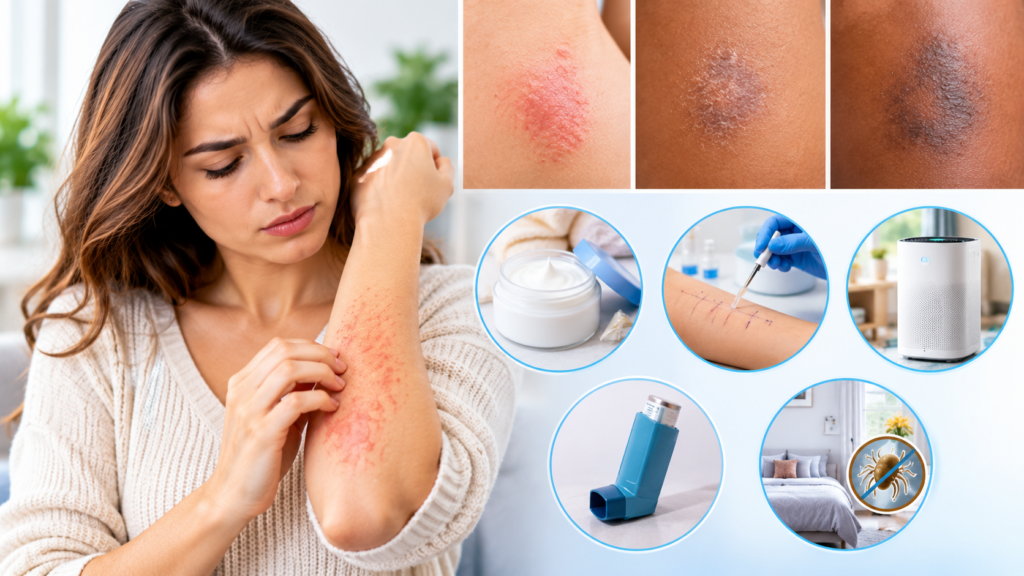
Eczema does not always look red. On deeper skin tones, flares often appear brown, purple, gray, or ashen, which can delay diagnosis.
After a flare heals, deeper skin is more prone to post-inflammatory hyperpigmentation, dark patches that can linger for months. Lighter skin may instead show lingering pinkness. Our dermatologists account for these differences so that diagnosis and treatment fit every complexion.
Managing Eczema, Allergies, and Asthma
Early, consistent care makes a real difference:
- Protect the skin barrier daily. Fragrance-free moisturizers applied right after bathing seal in moisture and help keep allergens out.
- Treat eczema flares promptly. Treatment helps control itching, inflammation, and skin damage. Researchers are still studying whether early eczema treatment can prevent other allergic conditions.
- Discuss possible triggers with your specialist. Depending on your symptoms and medical history, skin prick or blood tests may help evaluate certain allergies. Dr. Neil Parikh, MD, our board-certified allergist, also performs patch testing to identify the cause of allergic contact dermatitis.
- Manage your indoor environment. Dehumidifiers, allergen-proof bedding covers, and HEPA filters reduce mold and dust mite exposure.
- Keep an asthma action plan. Knowing your medications and warning signs helps prevent emergencies.
For moderate to severe cases, newer biologic medications target the shared inflammation behind eczema and asthma, and some are approved for both. Our specialists can walk you through these options.
Why Coordinated Care Matters
When eczema, allergies, and asthma are managed by separate offices that never compare notes, care can feel fragmented. One doctor adjusts an inhaler while another changes a skin cream, and no one sees the full picture.
Our dermatologists practice alongside Dr. Neil Parikh, MD, our board-certified allergist, and our other allergy and asthma specialists. Together, we share findings, connect skin symptoms to underlying allergies, and coordinate one treatment plan.
That continuity supports your long-term skin health, too. The same dermatologists who help manage eczema also provide our routine screenings for skin cancer in Orlando, so everyday concerns and preventive care stay with one trusted team. When you search for a dermatologist near me, look out for practices that treat skin and allergies with a connected approach.
When to Schedule a Visit
Consider booking an appointment if you or your child:
- Has eczema that keeps flaring despite over-the-counter care
- Experiences wheezing, nighttime coughing, or shortness of breath
- Reacts to foods, pollen, pets, or products without a clear cause
- Has a family history of eczema, allergies, or asthma and new symptoms
Take the Next Step With Our Orlando Allergy and Asthma Team
You do not have to manage eczema, allergies, and asthma one at a time. Our Orlando allergy and asthma specialists and board-certified dermatologists treat the whole picture, from the skin barrier to the airways, and our dermatologists can pair your visit with skin cancer screenings at our Orlando offices.
Mid Florida Dermatology & Plastic Surgery is proud to be a trusted, top-rated resource for families across Central Florida. With same-day appointments and telehealth visits available, our team makes the search for a reliable dermatologist simple. Call 407-299-7333 or book online today to get started.
Recent Posts
The Hidden Link Between Asthma, Eczema, and Allergies, and Why It Matters for Your Care
What the Orlando Weather Is Doing to Your Pores
When Aesthetic Care Isn’t Enough: 5 Signs to See a Dermatologist About Your Skin
Layering a Facial Rejuvenation Plan: How Surgery, Injectables, and Lasers Work Together
Your Melanin Isn’t Sunscreen: The Truth About UV Damage in Darker Skin
